Real Life Stories Shared.

🦆 The Day the Ducklings Came Calling
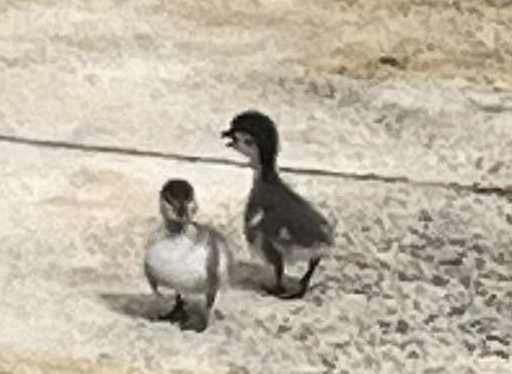
It began with an unusual sound drifting in from the back garden—soft, urgent chirping that didn’t belong to any of my usual little residents.
Curious, I stepped outside… just in time to see our cat in full pursuit of something small darting across the grass.
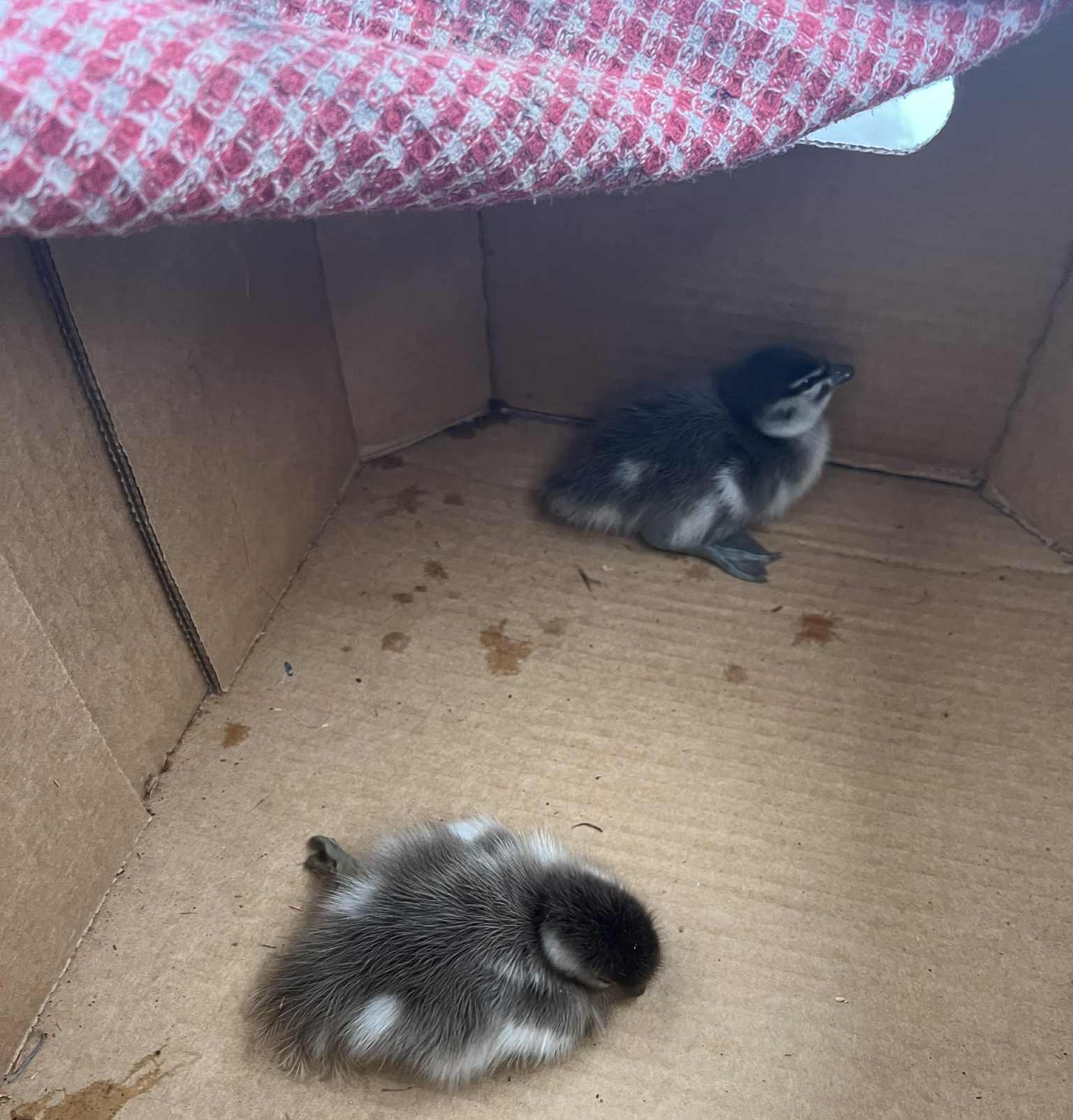
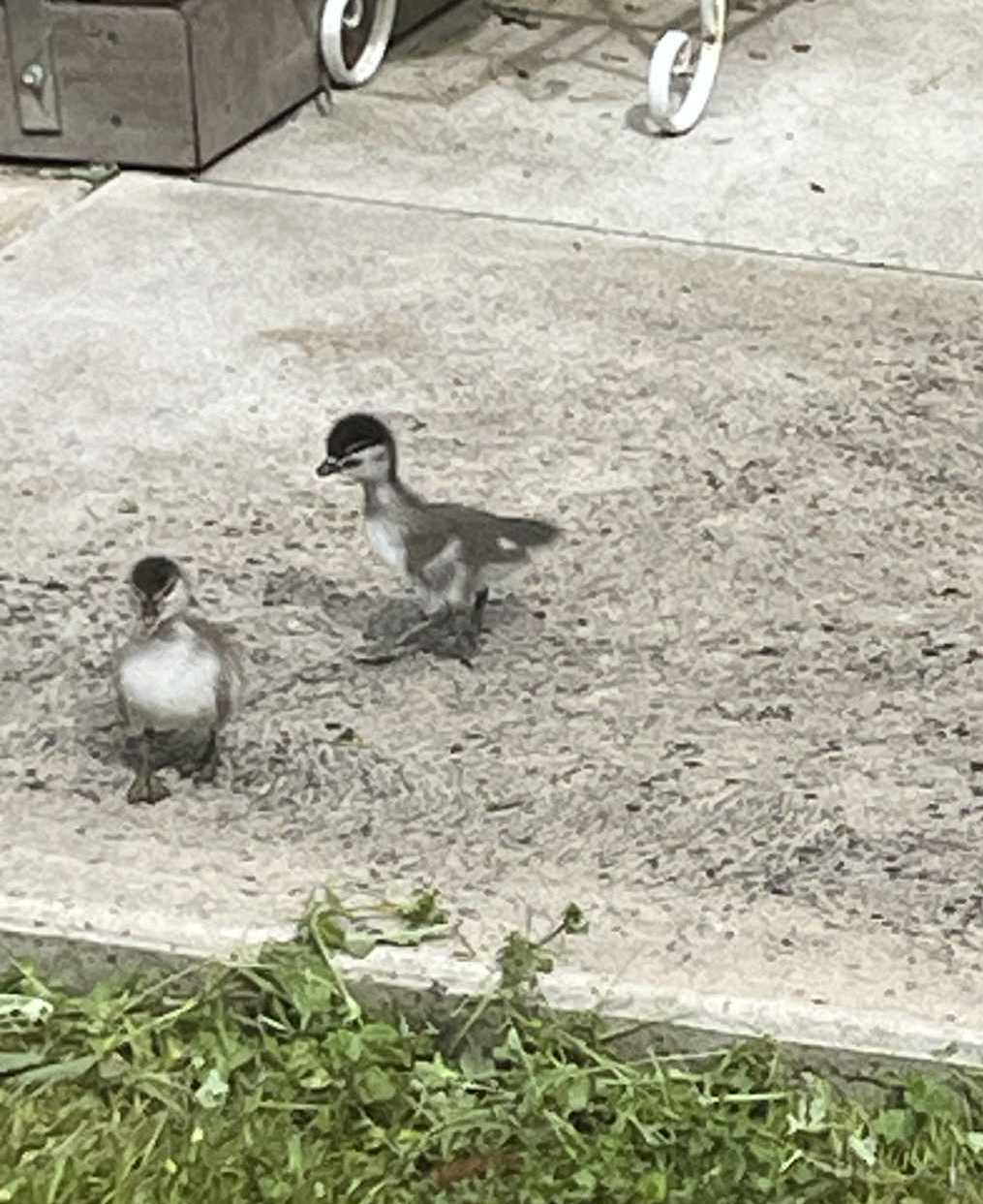
Ducklings.
Not one… but what seemed like dozens of them. Or so it seemed. There were actually eight.
I quickly told the cat off (who, to her credit, stopped immediately), and called out to John. At the time, he had a fractured leg and was hobbling around in a moon boot—but there was no time to waste. These little ones needed help, and I certainly wasn’t about to spend the entire day standing guard in the garden.
John did his best to catch them, hobbling here, there, and everywhere—but the ducklings scattered in every direction, quick as lightning. Frustration was setting in, and I was starting to worry.
Then, without really thinking… I did what comes naturally to me.
I called out, just as I would to my Pomeranians:
“Come here, babies…”
What happened next left us both completely stunned.
From all directions, the ducklings came running—right toward me. They gathered around my feet, nestling in close, snuggling against my shoes as if they had known me all their lives.
The cat sat beside me, politely looking away, doing her very best to resist temptation.
John stared at me in disbelief and said, “You could have done that in the first place!”
He quickly gathered the ducklings into a box, placing a towel over the top to keep them calm.
And then came the next question…
Now what?
I had absolutely no idea what to do with ducklings, so I called Wildlife Rescue. I explained everything, including how we had managed to gather them.
There was a pause.
Then she asked, quite seriously,
“Did you use a duck call?”
I laughed and said,
“No… I wouldn’t even know what a duck call sounds like. I just said ‘come here babies’ like I do with my dogs.”
Her response?
She was amazed.
She told me it was unheard of for wild ducklings to approach a human like that. Normally, they would be terrified and scatter at the first sign of people. She also explained that hand-raising ducklings has a very low success rate.
Her advice was simple:
Take them back to where we believed their parents might be, and see if a reunion was possible.
So that’s exactly what we did.
We brought them down to the dam—where the ducks nest every year—and thankfully, both parents were there.
What followed was the most heartwarming sight… a happy reunion. Since then, we’ve often seen them waddling along together on their little family walks, safe and sound.
In all the years we’ve lived here, not once have the ducklings wandered into our fenced back garden.
As John later told me, he had seen them earlier that day—walking in a neat little line, all on their own—when one adventurous duckling decided to head down the stairs into our garden… and the rest followed, tumbling along behind.
He assumed they would find their way back.
They didn’t.
But somehow… they found their way to me instead.

🦘 A Little Red Jellybean
I was out the front, watering the garden, lost in my own thoughts as I often am.
As I happened to glance over the solid fence that separates the garden from the side paddock, I noticed a kangaroo standing there. Something about her caught my attention. She seemed to be… straining.
It immediately reminded me of my Pomeranians when they are in labour.
So I stopped and watched.
What happened next left me completely amazed.
From beneath her, I saw the tiniest little thing—no bigger than a red jellybean—emerge. It began to crawl, slowly and determinedly, making its way upward.
Up… and up…
Until it reached her pouch.
And then, just like that, it climbed inside.
I stood there, completely transfixed.
Meanwhile, the garden tap was still running, and I had unknowingly created a small flood at my feet—but I didn’t notice. I couldn’t take my eyes off what I had just witnessed. When it was over, she simply hopped away.
And I was left standing there, asking myself,
“Did I really just see that?”
And then another thought followed almost immediately…
I wish birth was always that easy for every species.

🦔 The “Hedgehog” at the Window
“Anne, come quick! Look at the hedgehog tapping at our window!”
John’s voice carried through the house with urgency.
I smiled… and then looked at him.
“He must have travelled a very long way to get here.”
John frowned slightly.
“What do you mean?”
“Well,” I said, trying not to laugh, “hedgehogs only live in England… as far as I know.”
John wasn’t convinced.
“Well, it looks like a hedgehog!”
I walked over and took a proper look.
“Yes,” I said gently, “maybe… but it’s actually an echidna, just stopping by to say hello.”
And there it was—our unexpected little visitor—tapping softly at the window as if it belonged there all along.
Out here, you never quite know who might turn up… or what you might be called to see next.
Completely unaware she was about to amaze me.

🪶 The Little Blue Visitors
I first fell in love with Blue Wrens when John and I were on holiday in the Otways.
We were driving up a mountain toward a waterfall and stopped at one of the public rest areas—this time it was John who needed the stop, not me. I stayed in the car with the window partly down, waiting for him.
And then, out of nowhere, a tiny Blue Wren appeared.
It perched itself right on the edge of the open window and began chirping away, as if we had arranged to meet.
I remember thinking how brazen and sweet it was—so small, yet completely unafraid of people.
That moment stayed with me.
Months later, after we had returned home, something unexpected happened.
A pair of Blue Wrens—a male and a female—began visiting me. They would follow me from room to room, tapping lightly on the windows, as though they were checking in… or simply keeping me company.
They were delightful.
So much so, my children soon decided that any gift for me would have to include Blue Wrens somewhere—little reminders of those special visitors. Then, after some years, they stopped coming.
I felt their absence more than I expected.
Curious, I looked it up and discovered that Blue Wrens only live for around ten years.
I haven’t had any visit me like that since.
But I still remember them… and the quiet joy they brought with them.

🐑 The Things I Talk Him Into
We really had no idea what we were letting ourselves in for.
At the time, I had this lovely vision—baby lambs, hand-reared, growing up to be friendly little paddock ornaments that would happily wander up for a pat.
So, I found a farmer and ordered a few.
Six, to be exact.
He even delivered them for us.
As I stood there meeting our new arrivals, I reached out to pat one of the lambs and immediately thought,
“This baby could really do with a bath…”
Their coat felt… different.
So I asked the farmer, quite innocently, when I would be able to bathe them.
He looked at me in the strangest way and said,
“Forget adopting them… adopt me instead!”
I didn’t quite understand the humour at the time.
But I soon would.
He explained that what I was feeling was lanolin—completely natural, and very much a part of being a sheep.
Ah… okay then.
Lesson number one learned.
Next came feeding time.
Now, I assumed—quite reasonably, I thought—that feeding lambs would be much like feeding puppies. One at a time, nice and calmly, perhaps sitting them on my lap.
I didn’t even get through the first one.
It turns out… lambs have other ideas.
They all wanted their bottles at the same time.
And they all insisted on having all four feet firmly on the ground.
So there we were—John and I—heading out every four hours, armed with bottles.
Two in each hand… and one balanced between our legs… trying to feed three lambs each, all at once, while they jostled and pushed and demanded their share.
It was… chaotic.
And somewhere in the middle of it all, John summed it up perfectly with one line:
“The things I let you talk me into!”

🐦 Right Outside My Window
As I do every morning, I opened the bedroom window to let the day in.
But this time, something caught my eye.
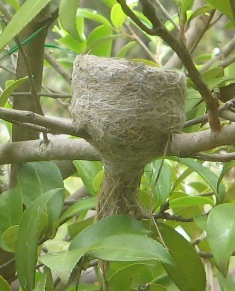
Two small birds—mostly brown, with flashes of yellow on their wings—were fluttering about, each carrying tiny pieces of what looked like string in their beaks.
Just outside the window stood a lovely Camellia bush… and that’s where they were.
Curious, I began to watch.
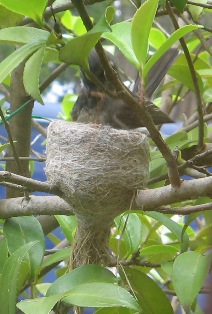
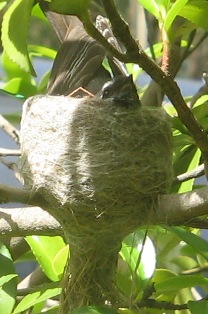
Day after day, I made a point of looking out, and sure enough, they were busy building their nest. They worked tirelessly, coming and going, never seeming bothered by my presence.
Sometimes they would pause and look at me… just as I looked at them.
We shared that quiet space.
So close, in fact, that if not for the glass between us, I could have easily reached out and touched them.
In time, their nest was complete.
Then came the eggs.
And then… the hatchlings.
I watched it all unfold, from those first careful preparations to the moment the tiny birds finally took flight.
What a wonderful experience it was to witness life so closely… right outside my window.

🛠️🐦 “Fix It”
John came running inside, something cupped carefully in his hands.
All he said was,
“Fix it!”
I looked at him, confused.
“Fix what?”
He gently placed a tiny bird into my hands.
It looked lifeless.
I asked what had happened, and he said the cat had gotten hold of it—but he had managed to take it from her.
I remember thinking, what do I know about birds?
And more importantly… is it even alive?
Then I noticed the faintest movement.
It was breathing.
Just barely.
Instinct took over.
I did what I would do for any puppy in that state—treat for hypoglycaemia. I mixed a little glucose with water and, using a syringe, carefully placed a single drop into its beak.
I waited.
It swallowed.
Then another drop.
And another.
And then, to my amazement…
It sat up in my hand.
Its eyes opened.
And it began to chirp—softly, but clearly—almost as if it were saying thank you.
I was completely captivated.
Once it seemed strong enough, I gently placed it outside in my side garden, right near the living room window.
I expected it to fly off straight away.
But it didn’t.
Instead, it stayed… looking back at me through the glass.
For a little while, we simply watched each other.
Then, eventually, it flew away.
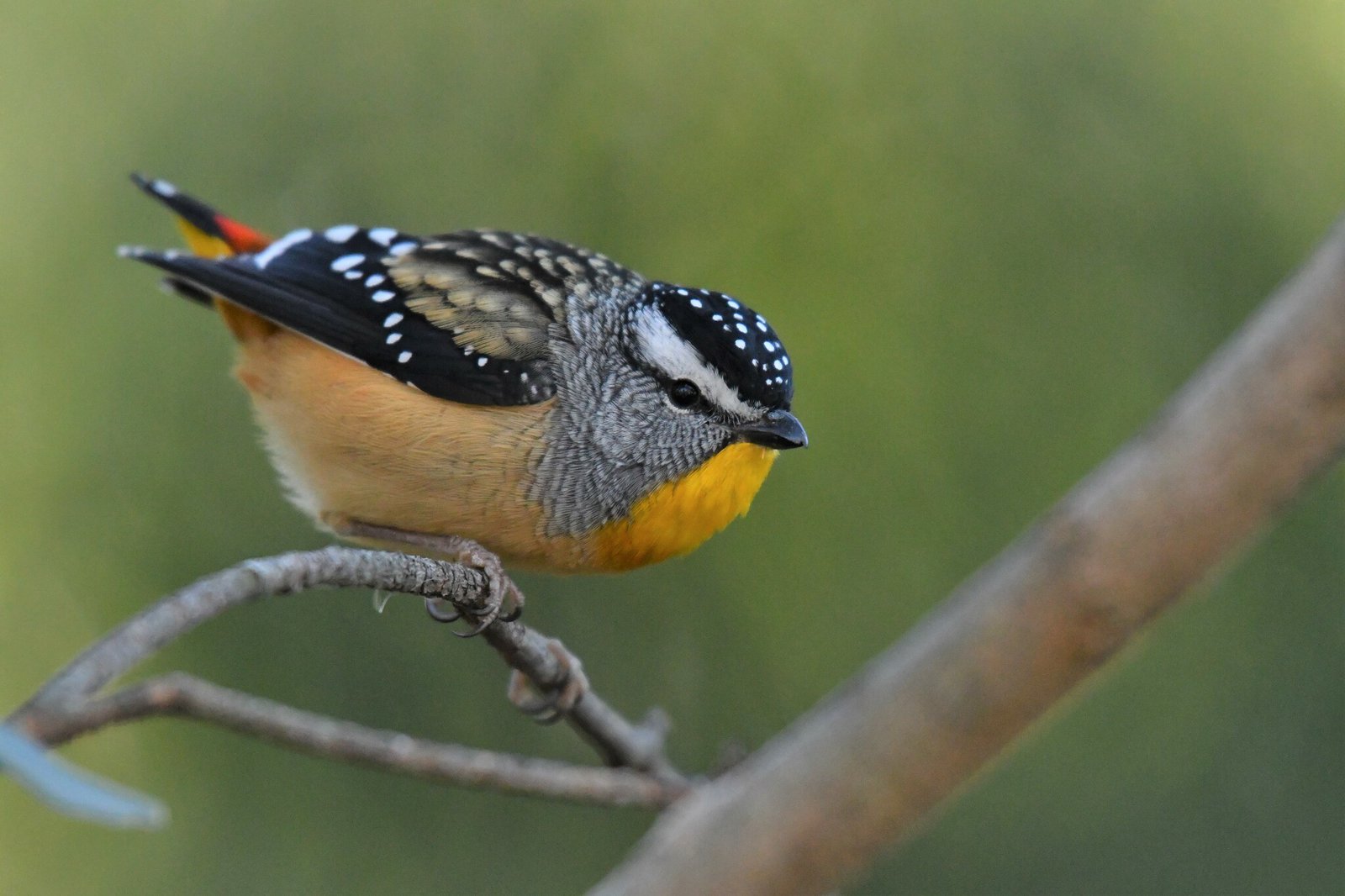
I later shared its photo on Facebook, curious to know what kind of bird it was. A bird lover told me it was a Speckled Pardalote—a fairly rare little bird—and explained that, unlike many others, they nest underground.
That answered a mystery I’d often wondered about—the tiny tunnel-like holes I had noticed in the grass.
I’ve never seen another one since.
But I’ve never forgotten that moment.